Jul 8, 2026
•Updated on Jul 8, 2026
•10 min read
What Does a Facilities Manager Actually Do Day to Day?
A facilities manager job description reads like a clean bullet list, but the real day is mostly chasing status, not making decisions. Here's what the role actually looks like hour to hour, and where the hidden coordination labor hides.

Vibha Ramprakash
Co-Founder, CMO/COO

A facilities manager keeps a building and everything in it running: the heating, the elevators, the cleaning, the contractors, the safety paperwork, so the people inside can get on with their jobs. That's the honest one-line version. Read almost any facilities manager job description and you'll get a tidy bullet list instead: maintain the building, manage vendors, control the budget, keep people safe. Every line is true. None of them tell you where the hours actually go.
Picture a Tuesday on a mid-size corporate campus. The plan is a walk-through: check the rooftop units, sign off a fire-door repair, review next quarter's preventive maintenance schedule. By 9:15 the plan is gone. A chilled-water alarm, a contractor who hasn't shown, a tenant emailing that a meeting room is 80 degrees. The walk-through waits. It usually does.
What does a facilities manager do?
Strip it to one sentence: a facilities manager makes sure the physical place a business runs from is safe, working, and paid for. The trade-body version is broader. IFMA, the International Facility Management Association, breaks the role into 11 core competencies drawn from its Global Job Task Analysis, spanning operations and maintenance, project management, finance, risk, sustainability, real estate, communications, quality, and occupant safety. It's a genuinely wide brief. In day-to-day terms, the core responsibilities usually land as a short, familiar list:
- Maintain building systems: HVAC, electrical, elevators, plumbing, and fire safety.
- Manage vendors and contractors: cleaning, security, maintenance, catering, and waste.
- Oversee health and safety compliance and keep the audit trail current.
- Control the operating budget and forecast capital spend.
- Coordinate space, moves, and the steady stream of occupant requests.
That's the facilities manager job description you'll find on any careers page, and every line is real work. What the list can't show you is the ratio — how much of the week each of those responsibilities actually eats. That is where the honest answer lives, and it looks nothing like the bullet points.
Where a facilities manager's day actually goes
No two days match, but the shape of a week is remarkably consistent across in-house teams. Break a representative day into where the time really lands, and the split surprises people who've only ever read the job description. Roughly speaking, it comes out like this.
| Task | Share of the day | Where the time actually goes |
|---|---|---|
| Planned and preventive work | ~20% | Walk-throughs, PM sign-offs, and inspections: the part the job title implies |
| Reactive requests | ~35% | Logging faults, triaging, and deciding what's actually urgent |
| Coordination and chasing | ~35% | Following up contractors and hunting status across systems that don't talk |
| Admin and reporting | ~10% | Updating the CMMS, compiling reports, and closing the loop |
Add the two biggest slices together and most of the week isn't spent deciding anything. It's spent finding out. A trained coordinator can burn five to ten minutes on a single ticket just cross-referencing systems that don't agree: the CMMS says one thing, the contractor's email says another, the tenant swears nobody called back. Stretch that across the full life of a work order, from intake and triage to dispatch, chasing, verifying, and closing, and it adds up to roughly 50 to 60 minutes of human coordination per job in the operations we've measured in practitioner interviews. Almost none of it is judgment. It's relay, and it's why a busy facilities helpdesk quietly becomes a bottleneck. We unpack that in why facilities helpdesks turn into bottlenecks.
Go back to that Tuesday. The chilled-water alarm turns out to be a sensor fault, not a compressor, and it takes fifteen minutes to establish that, most of it on the phone. The no-show contractor was double-booked on another of your sites, which you only discover by calling, because the portal you both share shows the job sitting at 'assigned' and nothing about why it's stuck. The hot meeting room is a failed VAV box, and the person who logged it has emailed three times because the portal never told them anyone was looking. None of these are hard decisions. They're all information that lives in different places, and you are the only system that joins them up.
That last part, the requester emailing into silence, is the quiet killer. Portal communication runs one way. Someone logs a fault and hears nothing until it's fixed, so they chase, and chasing you is now part of your day too. A store manager put it bluntly in one of our interviews: they don't want to deal with maintenance, they want to deal with customers. That gap between what an occupant expects and what they actually hear back is yours to close, over and over, all day. Every minute you spend translating between a frustrated occupant and an unresponsive contractor is a minute the job title never mentioned.
The hidden labor no one writes into the job description
Here's the part that never makes the job description: none of that chasing has a name. Your CMMS has a field for work-order status. It does not have a field for the forty minutes you spent getting the status to change. SLA tracking is retrospective, so you learn you've breached after the fact, not before. The labor that keeps everything moving between statuses lives in your inbox, your call log, and your head, and it shows up on no report, no budget line, and no performance review.
That's the real answer to what a facilities manager does day to day. You are the integration layer between systems that were never built to talk to each other. It's the least visible and most time-consuming part of the role, and it's precisely the part a modern AI workforce for facilities management is built to absorb.
Chasing is its own discipline, and nobody trains you for it. Contracted vendors rarely refuse a job outright. The problem is acknowledgment, not acceptance. As one FM leader told us, it's not whether they accept, it's whether they acknowledge in time. So you build a private cadence in your head: a text on day one, a call on day two, an escalation to their supervisor on day three, running for every open job at once. Miss the rhythm on one and it's the one that breaches. You become a professional nagger, and the skill is real, but it appears on no CV and in no job description.
There's a second cost to invisible labor. The record never tells the truth. Because the chasing happens in your inbox and over the phone, the CMMS only ever sees the tidy endpoints, logged, assigned, closed, and none of the friction in between. Ask it later how long jobs really take, or which contractor keeps slipping, and it can't answer, because the part that would explain it was never written down. The work between the statuses isn't just unpaid. It's unrecorded.
Is it a hard job? What the description leaves out
Facilities management is reactive by design, and that's the source of most of its stress. You can plan a week and lose it by 9:15. You carry single-point accountability for safety, for uptime, for the budget — yet much of what you answer for depends on other people doing things you can chase but can't control. In higher education, complex P1 faults pile up while contractors quietly cherry-pick the easy jobs. In healthcare, the nurse who logged a fault is unreachable on shift when the technician finally calls back. The pattern repeats everywhere: the outcome is on you, the levers are held by others.
That's worth saying plainly, because it reframes what being good at the job means. The best facilities managers aren't the ones who personally fix the most. They're the ones who keep the most balls in the air without dropping the one that matters. The relief valve isn't working harder. It's taking the manual chasing off your plate so the judgment calls get your attention instead.
Facilities manager vs maintenance manager: what's the difference?
These two titles get confused constantly, and on a small site they're often the same person wearing both hats. The clean distinction is scope. A maintenance manager owns the assets: the equipment, the technicians, and the preventive schedules that keep machines running. A facilities manager owns the building as a place people use, which takes in maintenance but also cleaning, security, space planning, moves, health-and-safety compliance, and the vendor contracts behind all of it.
Put simply, maintenance keeps the equipment alive; facilities keeps the whole environment working and safe. The bigger and more complex the estate, the more the two roles pull apart. A hospital or a university runs both, with the maintenance function usually reporting up into facilities. On either desk, though, the same tax applies: the coordination between a request and a verified fix is manual, and it's where the day disappears. It's a growing case for letting AI agents carry the chase while people keep the judgment.
What qualifications do you need to be a facilities manager?
There's no single license that makes you a facilities manager, which is why people arrive from maintenance, construction, engineering, hospitality, the military, and office management. What employers actually want is a blend: technical literacy across building systems, budget control, vendor management, and the people skills to coordinate a dozen parties at once. A degree in facilities management, engineering, or business helps, and so do years of running the floor.
$116,890
median annual wage for administrative services and facilities managers in the US
U.S. Bureau of Labor Statistics, May 2025
Certification is where it gets formal. IFMA offers the FMP and the CFM, the Certified Facility Manager credential built around those same 11 core competencies, and demand is steady. The U.S. Bureau of Labor Statistics projects employment of administrative services and facilities managers to grow about 4% through 2034, with roughly 36,400 openings a year. It's a durable, well-paid career. It's also, as any FM will tell you, far more coordination than the qualifications ever suggest.
If you're weighing the role as a career, know what you're signing up for. It's varied, it's people-heavy, and it's rarely dull, but it rewards a temperament that stays calm while five things go wrong at once. The technical knowledge you can learn. The composure and the coordination instinct are what separate a facilities manager who thrives from one who burns out. And increasingly, the coordination load itself is something you can offload rather than simply endure.
Taking the coordination off the facilities manager's desk
So here's the honest version of the job, and where it's changing. Most of a facilities manager's day is coordination labor that no system owns: answering requests, triaging, dispatching, chasing acknowledgments, verifying that a fix actually happened, and matching the invoice at the end. Heyfixit puts an AI workforce on exactly that middle. The agents answer the request, chase the contractor, gather the photos and the report, and keep the record straight, on top of the CMMS you already run, which stays the system of record.
What they don't do is take the judgment. The agents assemble the options and recommend; the facilities manager still makes the call on priority, on spend, on safety. That boundary is deliberate. The point isn't to replace the person answerable for the building. It's to hand them back the hours they lose to relay. On helpdesk admin, that's the difference we measure as roughly 4x more productive: the 50 to 60 minutes of coordination per job drops toward three to five when agents carry the chase.
The bullet-list job description will never mention any of this, because the work between the statuses has never had a name. That's the part worth getting off your desk. See how the work order coordination layer works.
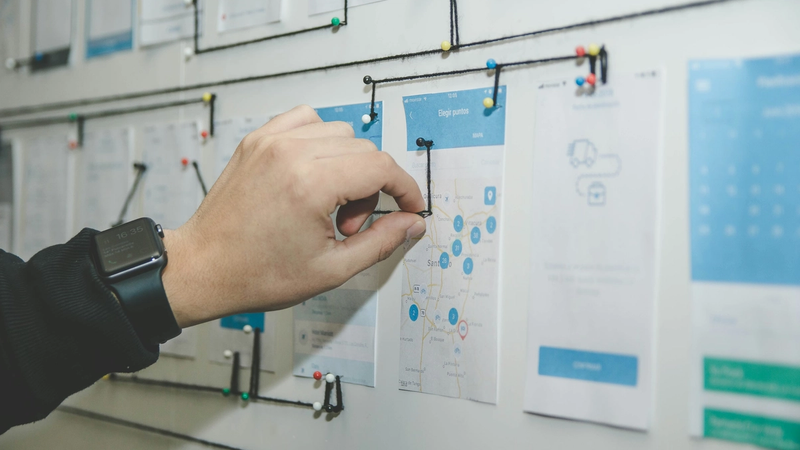
Cover image by Ali Mkumbwa on Unsplash.
Frequently asked questions
A facilities manager keeps a building and its services running so the people inside can work. That covers maintaining building systems like HVAC and elevators, managing cleaning and security vendors, controlling the operating budget, overseeing health and safety compliance, and coordinating space and moves. On a typical day the job swings between planned work, such as inspections and PM sign-offs, and reactive requests that arrive without warning. In practice, a large share of the role is coordination: logging faults, triaging what is urgent, and chasing contractors until the work is verified as done.
The role of a facilities manager is to be accountable for the physical environment a business operates from. That means the building is safe, its systems work, its services are delivered, and its costs are controlled. They sit between the occupants who use the space, the contractors who fix it, and the senior team that funds it. Strategically the role covers space planning, compliance, sustainability, and budgeting. Operationally it is about keeping requests moving from report to resolution. The single thread through all of it is coordination, which is why the role rewards people who can juggle many parties and moving parts at once.
It can be. Facilities management is reactive by nature, so the day is frequently interrupted by faults, complaints, and emergencies that override whatever was planned. Being the single point of accountability for safety, budgets, and uptime adds pressure, and much of the stress comes from chasing other people to do things you depend on but do not control. That said, it is also varied, well paid, and rarely dull. Managers who reduce the manual chasing, whether through better processes, clearer contracts, or automation, tend to find the role far more manageable and a lot less frantic.
A maintenance manager owns the assets: the equipment, the technicians, and the preventive schedules that keep machines running. A facilities manager owns the whole building as a place people use, which includes maintenance but also cleaning, security, space planning, moves, safety compliance, and vendor contracts. Maintenance keeps the equipment alive; facilities keeps the entire environment working and safe. On a small site one person often does both. On a large or complex estate the roles split, with the maintenance function usually reporting up into facilities. The facilities manager carries the wider commercial and compliance accountability.
There is no single required license. Many facilities managers come from maintenance, construction, engineering, hospitality, or office management. Employers look for technical understanding of building systems, budget and vendor management, and strong coordination and people skills. A degree in facilities management, engineering, or business helps, and so does hands-on operational experience. For formal credentials, IFMA offers the FMP and the Certified Facility Manager qualification, built around its core competencies. Pay is competitive: the US Bureau of Labor Statistics reports a median wage of about $116,890 for administrative services and facilities managers as of May 2025, with steady demand projected over the coming decade.

Vibha Ramprakash
Co-Founder, CMO/COO
Vibha has spent four years building technology for real estate and asset management operators. Today she works directly with FM leaders across the UK and UAE on the challenges that sit between good technology and the people who have to use it every day.
LinkedIn