Mar 18, 2026
•6 min read
Why FM Companies Lose Money on After-Hours Callouts — And How to Fix It
In FM companies without structured triage, 25–35% of P1 after-hours callouts close at P3 or lower. That's £150–300 in avoidable contractor fees per misprioritised ticket. The problem isn't your contractor rates. It's what gets asked — or not asked — at intake.

Vibha Ramprakash
Co-Founder, CMO/COO
Why FM Companies Lose Money on Every After-Hours Call
The problem isn't your contractors. It's your triage.
Every FM company has a version of this story.
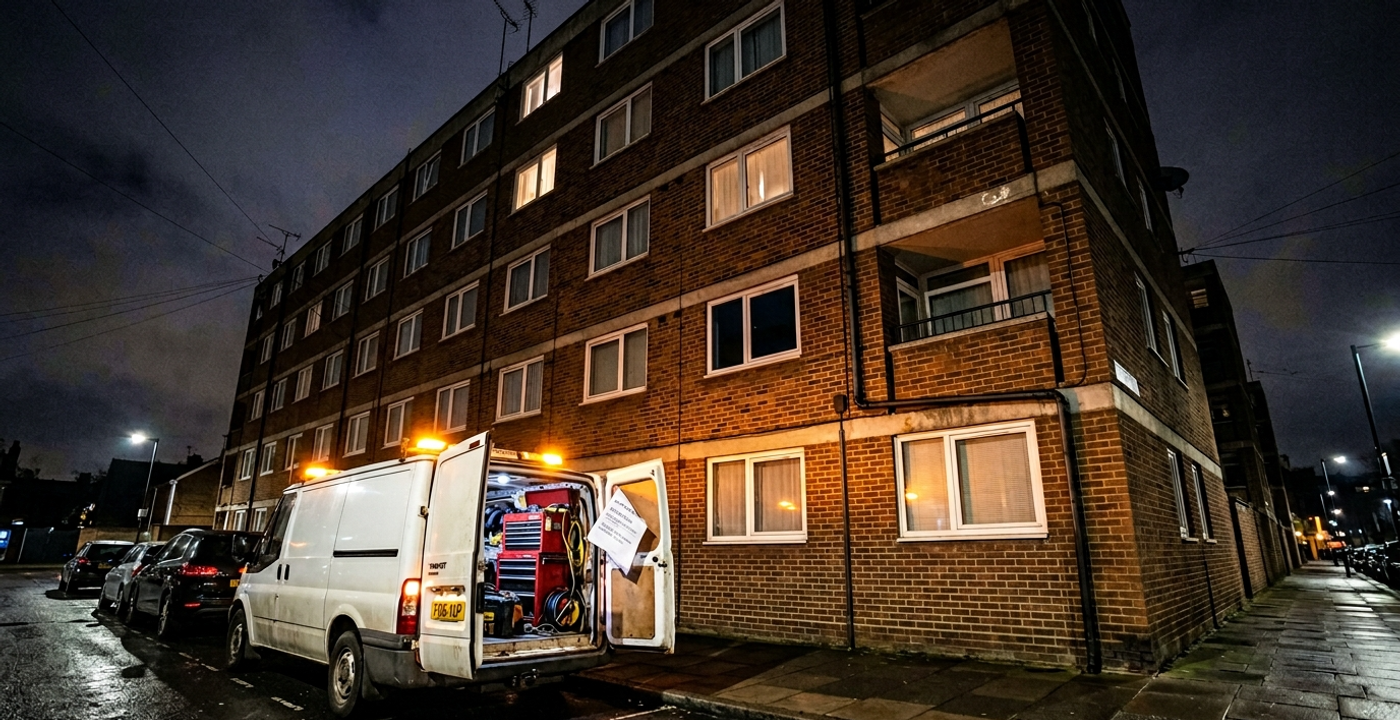
It's 10:47pm. A tenant calls. No light in the kitchen. Completely unacceptable. Needs someone tonight.
The out-of-hours handler — a new hire, an agency cover, someone who wasn't there for the briefing about that particular building — logs a P1. Contractor gets called out. Drives across the city. Arrives at 12:15am. Replaces a fuse.
The callout: £180–250. The issue: £4 component. The root cause: nobody asked the right question at intake.
Multiply that by how many times a version of this happens in a month. That's your after-hours cost problem.
The real driver of FM after-hours costs
Most FM companies attribute high out-of-hours costs to contractor rates, travel time, or the sheer volume of after-hours demand. All of those are real factors. None of them is the primary driver.
The primary driver is priority inflation — issues being logged at a higher severity than they warrant because the person taking the call had no structured way to determine the real priority.
In FM companies without structured triage, 25–35% of P1 tickets close at P3 or lower. Each misprioritised after-hours callout costs £150–300 in avoidable contractor fees on top of the actual repair cost. After-hours callouts represent 40–60% of total helpdesk overtime costs despite accounting for a small fraction of total ticket volume.
Priority inflation is the hidden driver of FM after-hours costs. The problem isn't your contractor rates. It's how many of those callouts should never have been P1 in the first place.
Why triage breaks down after hours
During the day, an experienced supervisor is usually within earshot. When a call is ambiguous — is this P1 or P2? Is this in scope? Does this client have a special arrangement? — the agent can turn around and ask. The right answer gets applied. The institutional knowledge is in the building.
After hours, that safety net disappears.
The out-of-hours handler is typically working from a limited brief. They know the basic SLA bands. They know how to log a ticket. What they don't have is the accumulated judgment of an experienced supervisor: the knowledge that this building's electrical issues almost always trace back to a known faulty RCD, that this client's after-hours threshold is actually higher than the contract states, or that a "no light" call is almost never a P1 unless there's a full circuit failure or a vulnerable occupant.
Without that judgment, the safest call is always to escalate. Log it high. Send someone. Better to over-respond than under-respond.
The result: your on-call team gets called out for issues that could have waited until morning. Your contractors charge premium rates. Your margin takes the hit.
What structured after-hours triage actually looks like
The solution isn't a longer briefing document. It's a structured decision process that guides the out-of-hours handler to the right priority without requiring them to already know the answer.
For an electrical call, the right questions are: is it one fitting, one room, or a full panel failure? Did anything trip — and does resetting resolve it? Is the affected area a common space or an occupied unit? Is there a fire risk or a vulnerable occupant?
Those four questions will correctly classify 90%+ of after-hours electrical calls without any supervisory input. A new hire can ask them. An automated intake system can ask them. The tenant already knows the answers — they just haven't been asked.
For HVAC: is the system not functioning at all, or is it underperforming? Is it a single unit or zone-wide? What is the reported temperature — does it represent a health risk? Are there vulnerable occupants?
For plumbing: is there active water ingress or a contained leak? Is it spreading or contained? How many units are affected? Is there risk of property damage if not attended before morning?
In each case, the answers — not the caller's emotional state — determine the priority.
The tenant already knows the answers to every triage question. They just haven't been asked. Four questions at intake will correctly classify 90%+ of after-hours electrical calls — no supervisor required.
The VVIP problem nobody talks about
There's a second after-hours cost driver that's even harder to measure: the calls that should be escalated but aren't, because the handler didn't know about a client's special status.
Most FM companies have a VVIP layer — clients where normal SLA rules don't apply, where a supervisor has quietly established that anything from a certain property gets bumped up, or where a flagship client's issues are handled differently because of renewal risk or relationship history.
During the day, experienced staff know who those clients are. After hours, that knowledge often doesn't transfer. The result is a flagship client's P3 getting treated as a P3 — and a relationship conversation the following morning that costs more than the callout would have.
The fix is the same as it is for priority inflation: make the rules explicit and visible to everyone who handles intake, not just the people who've been around long enough to know.
What the improvement looks like in practice
FM companies that have implemented structured after-hours triage typically see a 30–40% reduction in after-hours P1 callout volume within 90 days. That translates to £12,000–25,000 in annual saving per 1,000 monthly tickets through eliminated misprioritised callouts. Contractor relationships improve — fewer unnecessary callouts means less friction with on-call teams. And SLA data becomes meaningful again — when priority reflects the actual issue rather than caller emotion, your reporting tells you something useful.
None of that requires a new CAFM system. It requires a decision process — written down, made accessible, and applied consistently regardless of who takes the call.
FM companies that implement structured after-hours triage typically see a 30–40% reduction in P1 callout volume within 90 days. That's £12,000–25,000 back per 1,000 monthly tickets — without a single new system.
The question to ask your out-of-hours team tomorrow
"If I gave you a call at 11pm about a tenant with no kitchen light — what questions would you ask before you logged the priority?"
If the answer is hesitation, or "I'd probably just log it as P1 to be safe", you have a triage gap. And it's costing you every time it happens.
Frequently asked questions
The main driver is priority inflation, not contractor rates or travel. Issues get logged at a higher severity than they warrant because the person taking the call has no structured way to judge real priority. In FM companies without structured triage, 25–35% of P1 tickets close at P3 or lower, and each misprioritised after-hours callout adds £150–300 in avoidable contractor fees on top of the actual repair.
Put structured triage in place. A short decision process guides the out-of-hours handler to the right priority without needing a supervisor. For an electrical call, four questions about scope, whether anything tripped, the affected area, and any fire risk or vulnerable occupant will correctly classify 90%+ of cases. FM companies that adopt structured after-hours triage typically see a 30–40% reduction in P1 callout volume within 90 days.
Priority inflation is when tickets are logged at a higher severity than the issue warrants. After hours the handler often lacks the supervisor judgment to classify an ambiguous call, so the safe choice is to log it high and send someone out. The result is emergency callouts for issues that could have waited until morning, at £150–300 in avoidable fees each time.
No. None of this requires a new CAFM system. It requires a decision process that is written down, made accessible to everyone who handles intake, and applied consistently regardless of who takes the call. The same explicit rules also catch VVIP clients whose issues should be escalated but often are not after hours.

Vibha Ramprakash
Co-Founder, CMO/COO
Vibha has spent four years building technology for real estate and asset management operators. Today she works directly with FM leaders across the UK and UAE on the challenges that sit between good technology and the people who have to use it every day.
LinkedIn